


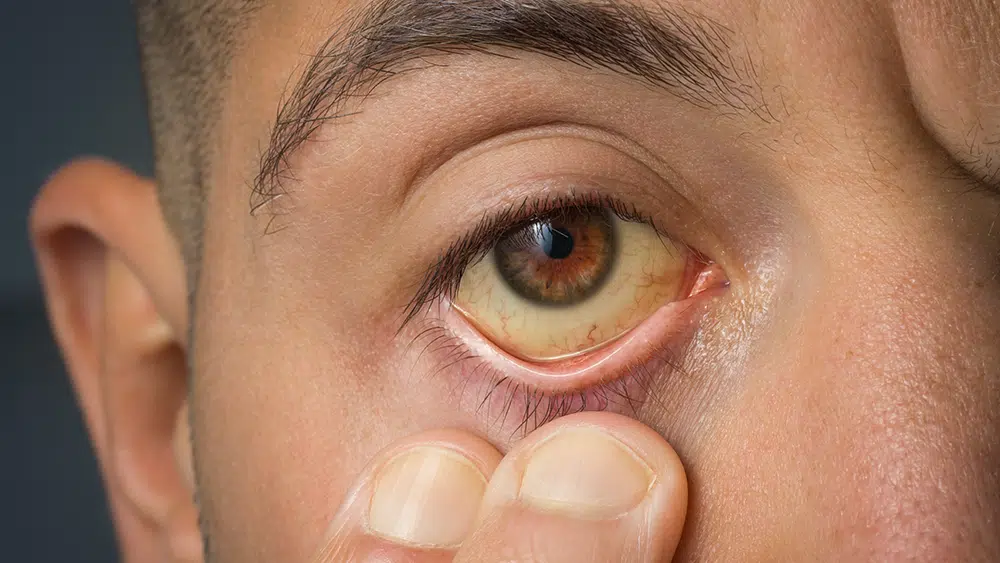
Most people don’t think about jaundice until one day they catch themselves in the mirror and something feels… off. Maybe the eyes look a little yellow, or someone else points it out and you pretend you didn’t panic for a second. That slight color change is usually the body’s way of whispering, “hey, something isn’t working the way it should.” Not screaming — whispering.
And honestly, when adults get jaundice, it’s usually not random. Something in the liver, gallbladder, or even the blood is struggling in the background.
What Jaundice Really Means (for normal humans, not doctors)
There’s this pigment called bilirubin. Everyone has it. The liver usually processes it quietly. Nobody even thinks about it. But if the liver slows down, or bile gets stuck somewhere, or blood breaks down too fast, the bilirubin just sits in the bloodstream and… yeah, that’s when you turn yellowish.
It’s not the color that’s the real issue — it’s what’s happening behind the scenes.
Signs People Brush Off Until It Gets Obvious
Before the yellow tint gets noticeable, adults often feel little things they blame on stress or bad sleep:
- darker urine than usual
- feeling wiped out for no solid reason
- stools looking pale
- weird heaviness under the ribs on the right side
- occasional bitter taste
- very slight yellow tint in the eyes
Individually they don’t seem serious. Together, they tell a different story.
Main Causes of Jaundice in Adults (The real-life version)
1. Liver infections
Hepatitis and similar infections slow everything down. You might feel tired, maybe a little feverish. The yellowing usually shows up later.
2. Alcohol-related liver damage
People don’t like hearing it, but consistent heavy drinking wears the liver out. Over time, bilirubin starts piling up.
3. Blocked bile ducts
Gallstones, swelling, inflammation — anything that stops bile from flowing. Usually comes with sharp pain and nausea.
4. Rapid breakdown of blood cells
Sometimes nothing is wrong with the liver at all. The blood cells just break down too fast, and the liver can’t keep up.
5. Medications or chemicals
There are medications that strain the liver quietly for months. Then suddenly jaundice appears and people finally go, “Wait, is this from the pills?”
6. Fatty liver
This one is extremely common now. Extra fat slowly builds inside the liver and makes it sluggish.
Managing Jaundice Without Freaking Out
People often panic when they see the yellow shade, but acting early makes recovery much easier. Doctors usually check bilirubin, run liver tests, maybe do an ultrasound. Nothing dramatic.
Meanwhile, at home, the basic stuff actually matters:
- drink enough water
- eat simple meals
- cut out alcohol completely
- rest way more than you think you need
- avoid oily, fried food
- don’t experiment with random herbal teas unless your doctor okays it
Jaundice isn’t something you “push through.” The body needs time and gentleness.
The Bottom Line
The yellow color is just the visible part. The real issue is inside — liver stress, blocked bile, or fast blood breakdown. Understanding the causes of jaundice early helps adults get the right treatment and prevent things from getting worse.
Sometimes your body whispers before it shouts. Catching it early makes all the difference.
