


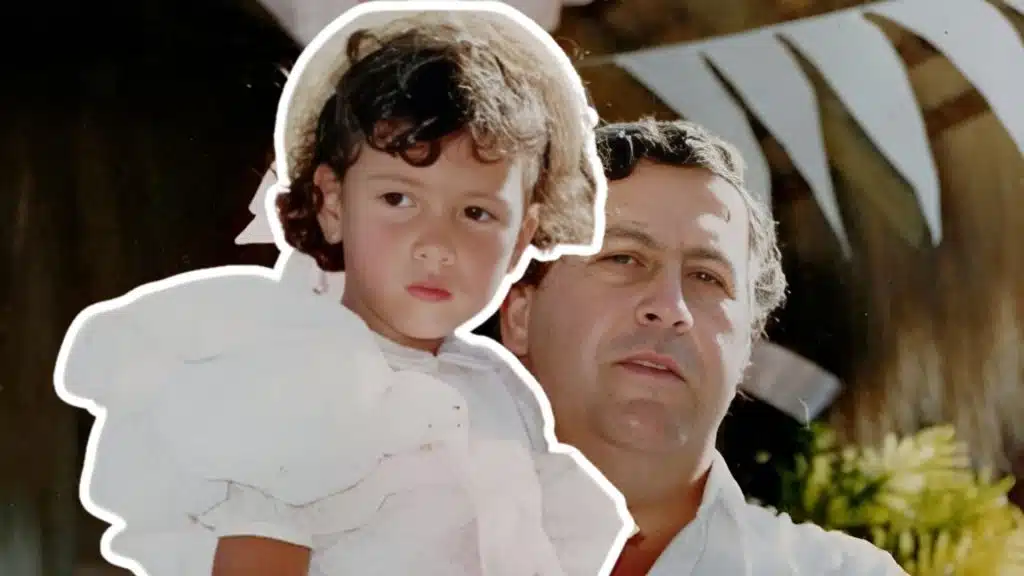
Few names spark as much curiosity about identity, trauma, and family legacy as hers. As the daughter of one of the most widely discussed criminal figures of the late 20th century, Manuela Escobar has grown into adulthood surrounded by speculation. Yet the reality of her life is far quieter than the myth. This article explores what is known about her early years, her family’s history, the circumstances following 1993, and the complicated narratives that continue to follow her today.
Early Life: Childhood Inside a Storm
Manuela Escobar was born in 1984 to Pablo Escobar and María Victoria Henao, becoming the younger of two children during the height of her father’s power. Her early years were marked by dramatic contrasts. On one hand, her family enjoyed extraordinary material luxury. On the other, danger was constant. The Escobar household lived under tight security, experienced frequent relocations, and was routinely under threat due to the ongoing conflict surrounding the Medellín Cartel.
Accounts from those who interacted with the family during that period often describe extravagant gifts contrasted with periods of intense fear and emergency escapes. For Manuela, these extremes created a childhood unlike anything typical: sheltered yet shaken by the chaos that surrounded her family’s empire.
Flight, Exile, and the Years After 1993
Her life changed irrevocably in 1993. Pablo Escobar’s death triggered a wave of legal pressure, asset seizures, and widespread hostility toward the surviving family. Still just a child, Manuela found herself uprooted again, but this time without the wealth or power that once offered protection.
Throughout the 1990s and early 2000s, she lived under assumed identities alongside her mother and brother. They moved between countries seeking safety and stability amid ongoing threats and legal investigations. During this period, her mother and brother occasionally appeared in the media or became involved in legal matters. Manuela, however, remained largely absent from public view.
This absence is intentional. For many who grow up in the shadow of a criminal legacy, anonymity becomes a safeguard — a way to avoid harassment, stigma, and exploitation.
Public Image vs. Private Reality
Because Manuela Escobar chose privacy at an early age, the limited public information about her has created space for rumors. Media outlets often rely on secondhand accounts, recycled anecdotes, or photographs from her early childhood. Stories about her schooling, health challenges, or psychological impact stemming from her early experiences circulate frequently, though their accuracy varies.
In the digital age, her name occasionally appears in social media discussions or linked to profiles with minimal activity. Whether these accounts belong to her or imitators is unclear, and the ambiguity adds to the mystique surrounding her current life. What is evident is that she has made a concerted effort to remain out of the public sphere, a decision that has shaped her adult identity.
Net Worth: Speculation, Myth, and Uncertain Facts
A persistent topic of curiosity is the question of Manuela Escobar’s net worth. Online estimates exist, but few — if any — rely on verifiable documentation. Following her father’s death, the Colombian government seized a massive portion of his assets. Many properties were lost, accounts were frozen, and legal battles consumed much of what remained.
For these reasons, any attempt to assign a concrete financial figure to her life today is speculative. Estimates range widely, but most rely on conjecture rather than confirmed records. It is also important to remember that growing up in a wealthy household does not guarantee long-term financial security, especially when that wealth is linked to illegal activity and subject to aggressive government confiscation.
In other words, the legend of buried fortunes may sell headlines, but documented evidence supporting claims of hidden wealth for her heirs is lacking.
The Media’s Portrayal: Narratives to Approach Carefully
When media outlets discuss figures connected to Pablo Escobar, they often fall into predictable storytelling patterns. Manuela Escobar is typically framed through one of three lenses:
The Innocent Survivor
A child who had no control over her environment and now seeks a peaceful life.
The Heiress
The trope that assumes she lives off immense secret wealth.
The Reclusive Figure
A mysterious adult who vanished from public life, prompting endless speculation.
Each narrative contains elements of truth yet oversimplifies her reality. Real lives do not fit neatly into media-friendly stereotypes. Her story is ultimately one of a young woman shaped by extreme circumstances, who then made a conscious choice to protect her identity.
Entertainment and Popular Culture
Films, TV series, and documentaries about her father’s rise and fall often include references to Manuela. However, these portrayals are dramatized. They aim for emotional impact rather than precision. Scenes involving her childhood or her life after 1993 are based on a mixture of public records, interviews, and artistic interpretation.
For viewers, it’s important to distinguish between storytelling and fact. Unless creators cite direct interviews or firsthand documentation, portrayals should be viewed as entertainment rather than authoritative biography.
Ethical Considerations: Privacy, Identity, and Responsible Coverage
Manuela Escobar did not choose fame, nor did she participate in the criminal activities that defined her father’s legacy. She was a child during the years of the Medellín Cartel’s dominance, which raises important ethical questions about how the media covers individuals in her position.
Journalists and content creators have a responsibility to balance public interest with respect for personal privacy. Sensationalizing her story can cause harm, especially for someone who has lived through intense trauma. Responsible reporting should focus on verifiable information, avoid exploiting tragedy, and acknowledge that children of public criminals are not accountable for the actions of their parents.
The Confusion Around Similar Names
A recurring problem in online searches is the overlap with similar names, such as Manuel Escobar or individuals sharing the surname Henao. This can mislead readers or create incorrect associations. For accuracy, it’s essential to differentiate between unrelated people to prevent misinformation from spreading.
What Her Life Looks Like Today
The most accurate description of Manuela Escobar today — often phrased as “Manuela Escobar hoy” in searches — is that she lives a life marked by privacy and distance from public scrutiny. Reports suggest she changed her identity years ago and lives quietly to avoid attention linked to her family history.
Whether she has returned to Colombia or remains abroad is not publicly verified. What is clear is her continued commitment to a private life, free from public commentary and far from the legacy that once defined her surroundings.
Final Thoughts
Manuela Escobar’s story is complex, shaped by privilege, danger, trauma, and the weight of a globally recognized surname. Yet beyond the myths and speculation lies a simple truth: she is an adult who has worked to build a life away from the violence and notoriety that marked her early years.
Public fascination with her father’s empire ensures that her name will always attract attention. However, the most respectful and accurate approach to understanding her life is to rely on confirmed information, acknowledge the limits of what is publicly known, and recognize her right to privacy.
Her journey is a reminder that family history does not define destiny — and that every individual deserves the space to move forward on their own terms.
